Sensitive vs. Sensitized Skin: Why the Difference Matters


One of the most common statements heard during a client consultation is:
"I have sensitive skin."
Sometimes that's true.
Sometimes it isn't.
As estheticians, understanding the difference between sensitive skin and sensitized skin is essential for making appropriate treatment recommendations, selecting home care products, and helping clients achieve better outcomes.
While the terms are often used interchangeably, they describe two very different conditions.
What Is Sensitive Skin?
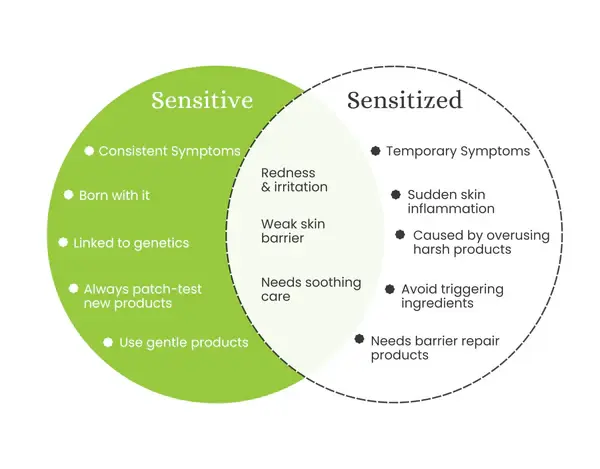
Sensitive skin is generally considered a skin type.
These clients have a natural tendency toward reactivity due to genetic, physiological, or environmental factors.
They may experience:
Redness
Burning
Stinging
Itching
Increased reactivity to products
Environmental sensitivity
Clients with conditions such as rosacea often fall into this category, although not all sensitive skin is associated with a diagnosed condition.
Because sensitive skin is often an inherent characteristic, it may require long-term management rather than a short-term solution.
What Is Sensitized Skin?
Sensitized skin is different.
Rather than being a skin type, sensitized skin is a condition.
It occurs when the skin's barrier function becomes compromised, resulting in increased reactivity and irritation.

Common signs may include:
Redness
Tightness
Stinging
Burning
Flaking
Unexpected breakouts
Increased product intolerance
Unlike sensitive skin, sensitized skin is often temporary and may improve when the underlying cause is identified and addressed.
Why Are We Seeing More Sensitized Skin?
Many estheticians believe sensitized skin is becoming increasingly common.
Several factors may contribute:
Overuse of Active Ingredients
Retinoids, exfoliating acids, benzoyl peroxide, and other active ingredients can provide significant benefits when used appropriately.
However, overuse or improper layering can lead to irritation and barrier disruption.
Excessive Exfoliation
Clients often believe more exfoliation equals better skin.
Unfortunately, aggressive exfoliation can weaken the skin barrier and trigger inflammation.
Complex Home Care Routines
Many clients arrive with multi-step routines inspired by social media, influencers, or online trends.
While individual products may be appropriate, combining too many actives can overwhelm the skin.
Environmental Stress
Sun exposure, climate conditions, pollution, travel, and lifestyle factors can also contribute to barrier impairment.
Why the Difference Matters
Misidentifying sensitized skin as sensitive skin can lead to ineffective treatment plans.
For example:
A client with sensitized skin may benefit from temporarily reducing active ingredients, simplifying their routine, and focusing on barrier repair.
A truly sensitive client may require ongoing modifications designed to manage their inherent reactivity.
When estheticians understand the difference, recommendations become more targeted and more effective.
Questions Worth Asking During Consultation
A thorough consultation often provides valuable clues.
Questions may include:
When did the symptoms begin?
Have you recently introduced new products?
How often are you exfoliating?
Are you using multiple active ingredients?
Has your skincare routine changed recently?
Have you noticed increased irritation following specific treatments?
The answers frequently reveal whether the concern is long-standing sensitivity or a more recent episode of sensitization.
Supporting the Skin Barrier
Regardless of the cause, supporting barrier health is often a valuable starting point.
Depending on the client and their individual needs, recommendations may include:
Simplifying home care routines
Reducing unnecessary active ingredients
Limiting exfoliation
Prioritizing hydration
Using barrier-supportive ingredients
Modifying treatment protocols when appropriate
In many cases, less becomes more.
Helping Clients Understand Their Skin
One of the most valuable services estheticians provide is education.
Many clients assume all redness, irritation, and discomfort indicate sensitive skin.
Helping them understand the difference between sensitive and sensitized skin not only improves compliance but also helps set realistic expectations for treatment and home care.
When clients understand what's happening to their skin, they are more likely to make informed decisions and achieve better long-term results.
The Takeaway
Sensitive skin and sensitized skin may look similar on the surface, but they are not the same thing.
One is generally an inherent skin characteristic.
The other is often a temporary condition linked to barrier dysfunction and external influences.
Understanding the distinction allows estheticians to create more effective treatment plans, recommend more appropriate home care, and ultimately help clients achieve healthier, more resilient skin.
In today's world of active ingredients, trend-driven routines, and information overload, that distinction may be more important than ever.


